Mafia Casino Winning Strategies, What Actually Sharpens Play
When we tested casino strategy ideas across roulette, blackjack, baccarat, live dealer rooms, slots, and a few less obvious table variants, one thing became clear quite quickly: the useful advice is usually quieter than the dramatic advice. There is no clever pattern that turns a house edge into a player edge overnight. Still, there are decisions that can make play more controlled, more enjoyable, and less expensive over time.
For players looking through the lobby at mafia casino, the most practical starting point is not chasing a “system” but deciding what kind of session they are actually having. Are we playing for a short bit of entertainment, using a welcome offer, testing live tables, or trying to stretch a set budget over an evening? Those sound like basic questions, perhaps too basic, but they affect almost every sensible choice that follows.
What strategy can and cannot do
Casino games are not all alike. Some are almost entirely driven by chance, while others leave room for informed decisions. Slots, for example, generally offer no move-by-move strategy beyond choosing the game, setting a stake, and knowing when to stop. Blackjack is different because the player makes choices, and basic strategy can reduce the house edge. Video poker can also reward accurate play, though it requires patience and a willingness to learn pay tables rather than simply pressing deal.
We found it useful to separate two ideas that often get mixed together. The first is improving expected value, meaning selecting rules or decisions that are mathematically less costly over many hands. The second is controlling volatility, meaning avoiding a session that becomes too intense for the available budget. Neither one is the same as forecasting the next spin, card, or roll.
That distinction sounds dry until a losing streak arrives. At that point, many players feel tempted to “correct” the result by increasing bets. But an unlucky run is not proof that a reversal is due. Roulette has no memory. Baccarat shoe outcomes do not politely balance themselves because the last few hands went one way. A slot does not owe anyone a bonus round after a cold hour.
Why the house edge still matters
The house edge is not a prediction of what happens in one visit. A player can win on a high-edge game, and lose quickly on a low-edge game. It is a long-run measurement, which is why it is easy to dismiss after one good night. Yet when we compared game rules and common bets, it remained the most dependable guide available.
For table-game players, this usually means looking for blackjack tables with favorable rules, baccarat Banker bets, or roulette versions with a single zero rather than double zero. It does not mean every session will look better. It means the cost of play is generally lower than it would be under weaker rules or less efficient bets.
Building a realistic bankroll plan before play starts
A bankroll is simply the amount allocated for casino entertainment, separate from rent, bills, savings, credit payments, or any money needed in ordinary life. We mention that plainly because the most effective strategy is not clever betting. It is refusing to let a casual session become a financial problem.
Our impression after comparing different play styles was that a bankroll works best when it is divided before the lobby gets exciting. The figure does not have to be large. In fact, a smaller number can make decisions easier, because there is less room for bargaining with ourselves after a loss. If a planned session is $60, then $60 is the session, not the opening suggestion.
We used the following setup as a straightforward framework. It is not a formula for winning, but it helps make the cost, pace, and possible duration more visible before a first bet is placed.
- Set a total entertainment budget that can be lost without affecting anything essential.
- Choose a base bet small enough to allow many rounds, rather than only a handful.
- Decide on a loss limit and a modest win target before opening a game.
- Use cash, a prepaid limit, or a clearly capped payment method where possible.
The final point matters more than it first appears. The less friction there is between a losing hand and another deposit, the harder it can be to notice that a session has changed character. A clear payment limit creates a pause. We found that pause useful even in test sessions where the stakes were deliberately low.
| Bankroll approach | What it helps with | What it does not do |
|---|---|---|
| Flat betting | Keeps each wager predictable and slows sharp swings. | It does not eliminate the house edge. |
| Session loss cap | Prevents one poor run from becoming an open-ended chase. | It cannot recover prior losses. |
| Fixed time limit | Reduces fatigue and rushed decisions. | It cannot improve random outcomes. |
| Small base stake | Allows more rounds and smoother pacing. | It does not make a game profitable by itself. |
Flat betting felt somewhat unglamorous when we tested it, and that may be exactly why it works as a discipline tool. The session stays readable. A losing stretch remains disappointing, of course, but it does not become dramatically larger just because a player felt the next bet “had to be the one.”
Win targets are useful, but not magical
There is a mild contradiction here. A win target cannot preserve winnings in every situation because the player still has to choose to leave when it is reached. Yet that is the practical benefit. Setting a target, perhaps 20% or 30% above the opening bankroll, gives a session a defined finish line. It is not a law, but it can interrupt the familiar urge to keep going because things are finally going well.
We would avoid setting targets that are wildly ambitious. Trying to double a bankroll in one sitting often encourages riskier wagers late in the session. A smaller target is not exciting on paper, but it is more likely to be treated as an actual stopping point.
Choosing major tables with a clearer head
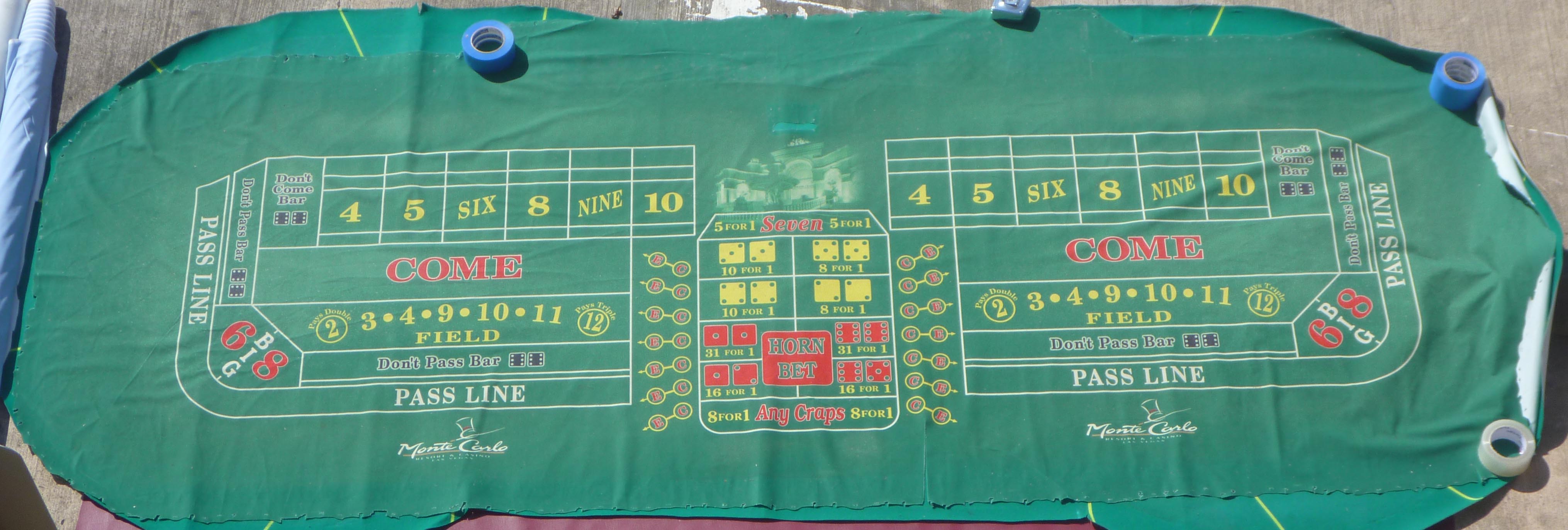
Different casino tables create different kinds of pressure. Blackjack asks for decisions. Roulette creates a fast visual rhythm. Baccarat can feel simple enough to invite large bets too early. Craps offers many choices at once, which can be fun but also a little overwhelming when the layout is new. The better choice depends partly on what we enjoy, but game structure should be part of the decision as well.
At live tables, we also noticed that pace matters. A crowded blackjack game can naturally slow the number of hands per hour. That is not always inconvenient. Slower play gives more time to check a decision chart, observe rules, and avoid acting from irritation. By contrast, rapid online formats can make a small budget disappear faster than expected simply because there are more betting opportunities.
Here is the broad comparison we would use when deciding where to spend a session bankroll. Exact game rules always matter, so these are general guideposts rather than fixed promises.
| Game type | More sensible approach | Common costly mistake |
|---|---|---|
| Blackjack | Use basic strategy and verify table rules before sitting down. | Taking insurance automatically or improvising on every hand. |
| European roulette | Prefer single-zero tables and keep stakes consistent. | Assuming recent numbers predict the next spin. |
| Baccarat | Understand Banker, Player, and Tie payouts before betting. | Chasing Tie bets for the larger advertised payout. |
| Craps | Start with straightforward Pass Line or Don’t Pass options. | Spreading chips across unfamiliar high-edge side bets. |
| Slots | Choose a stake that matches the session budget and check volatility. | Raising stakes to force a feature or bonus round. |
We would add one small caveat. A low-house-edge table is not automatically the best table for every player. If blackjack strategy feels stressful, a slower roulette session with a strict budget may be more enjoyable. The most suitable game is often the one where we understand the rules, can afford the pace, and do not feel pushed into bets we did not plan to make.
Blackjack rewards preparation, not intuition
Among common casino games, blackjack is frequently discussed because correct decisions can make a measurable difference. Basic strategy tells players when hitting, standing, doubling, splitting, or surrendering is usually best according to the dealer’s visible card and the player’s hand. It does not identify “hot” cards. It simply avoids many of the expensive instinctive choices people make.
We recommend checking whether a table uses several decks, whether the dealer hits or stands on soft 17, whether surrender is available, and how blackjack pays. A 3:2 blackjack payout is generally much more player-friendly than 6:5. That single rule detail is easy to overlook in a bright, busy lobby, but it can matter more than a handful of dramatic playing tips.
Roulette and baccarat need restraint more than systems
European roulette is generally preferable to double-zero roulette because the single zero lowers the house edge. Beyond that, the biggest choice is often whether the player wants a lower-volatility even-money wager or a more speculative straight-up number bet. Neither has a secret timing advantage. The payout structure is visible, and the risk is visible too.
Baccarat is even more stripped back. Banker is usually the lower-house-edge main bet, despite the commission normally charged on wins. Player is close behind. Tie bets may look tempting because of their big payout, but their house edge is much higher. We found that simply avoiding the flashy option made the game easier to approach without feeling that we were missing an important trick.
Popular betting systems and the myths behind them
The Martingale, Fibonacci, Paroli, and dozens of variations are often presented as if they unlock a hidden weakness in casino games. What they really do is rearrange risk. Some can produce many small wins, which is why they feel convincing. The problem appears when the inevitable losing sequence becomes long enough to meet a table limit or consume the entire bankroll.
We tested these ideas on paper first, then considered what they would look like under ordinary table limits. That was enough to expose the issue. A doubling system does not change the probability of the next even-money result. It only makes the required recovery bet grow at a pace that can become uncomfortable surprisingly fast.
The three checks below helped us separate a harmless betting preference from a dangerous belief that a system can beat randomness.
- Ask whether the system changes the odds of the next outcome. If not, it does not create a mathematical edge.
- Calculate how much is needed after four, five, or six consecutive losses.
- Check the table maximum before assuming a progression can continue indefinitely.
A progression can still be used as a personal pacing method if the stakes remain affordable and capped. Some players enjoy a gentle positive progression after a win, for instance. But it needs to be understood as entertainment structure, not a recovery engine. The language matters because expectations change behavior.
There is another myth that deserves a mention: the idea that a player can identify a slot that is “about to pay.” Return-to-player figures describe a theoretical long-term average, not a promise for the next hundred spins. Volatility can influence how results tend to cluster, but it does not tell us that a particular machine is ready to release a bonus.
Bonuses, wagering and practical value
Bonuses can extend play, but they are not automatically free money. We reviewed typical casino promotions with the same question in mind: can the rules fit the game and bankroll we were already planning to use? If not, the bonus may create pressure to wager more than intended, which is rarely a good trade.
Welcome offers often include a deposit match, free spins, cashback, or a mix of these. The key figures are wagering requirements, contribution rates by game, maximum bet limits while wagering, expiry periods, and maximum withdrawal conditions. These details can feel tedious, but the terms are where the real value of a promotion is decided.
Before opting in, we would run through this short review rather than reacting only to the size of the headline offer.
- Read the wagering multiple and determine whether it applies to the deposit, the bonus, or both.
- Check which games contribute fully, partly, or not at all toward wagering.
- Confirm the maximum permitted wager, the deadline, and any withdrawal ceiling.
Slots commonly contribute more toward wagering than table games, while blackjack, baccarat, and roulette may contribute less or be excluded. This is not necessarily unfair, it is simply how casinos manage bonus risk. Still, it means a player who mainly enjoys tables may be better off declining a complicated offer than forcing action on games they do not normally play.

Our preference was for transparent promotions with terms that could be understood in a few minutes. A smaller reward with manageable wagering can be more useful than an enormous-looking package with conditions that require a far larger turnover than the original bankroll allows.
A repeatable session routine for calmer decisions
Strategy becomes more realistic when it is turned into a routine. Without a routine, it is easy to remember only the exciting parts of a session, the big win, the near miss, the moment a number nearly landed. What gets forgotten is the number of bets, the time spent, and the point at which play stopped being fun.
We do not think every casino visit needs to feel like accounting. That would miss the point. But a few checkpoints create enough distance to notice when the mood changes. These were the signals we considered worth watching during longer sessions:
- Increasing stakes because the previous result was frustrating.
- Ignoring a planned break because the game feels “close” to changing.
- Making deposits without checking the remaining total budget.
- Playing tired, distracted, upset, or under pressure to recover money.
- Switching repeatedly between games in search of a faster win.
After any one of these, a pause is sensible. After several, ending the session is usually the stronger choice. This is where responsible gambling tools can be genuinely useful rather than merely decorative. Deposit limits, time reminders, cooling-off periods, and self-exclusion options are there to support a decision that can otherwise be hard to make in the moment.
Keep a simple record, not a superstition diary
A quick record of deposits, withdrawals, game type, and total time can reveal more than a notebook full of “lucky” numbers. We are not suggesting that every player needs a spreadsheet. A short note after a session is enough. It can show whether the entertainment budget is holding, whether certain games are too fast for the chosen stake, and whether bonuses are actually adding value.
What we would not record as evidence is a chain of colors, numbers, shoe patterns, or perceived dealer tendencies. Those observations can be interesting, and they are part of why table games have atmosphere, but they are not reliable forecasting tools in standard random play.
Conclusion
Conclusion: the strongest Mafia Casino winning strategy is not a method that claims to defeat chance. It is a combination of choosing games with understandable rules, using a fixed entertainment bankroll, keeping bets proportionate, reading bonus terms carefully, and leaving when the plan says to leave. Basic blackjack strategy can help reduce avoidable errors. Single-zero roulette can be preferable to double-zero roulette. Banker baccarat bets can be more efficient than Tie bets. Those are genuine practical improvements, but none of them guarantee profit.
We came away with a fairly calm view of casino play. The best sessions were not necessarily the ones with the biggest swing. They were the ones where we knew the budget, understood the table, and could stop without trying to turn every loss into a story that needed correcting. It is less dramatic, admittedly. It is also far more sustainable.
FAQ
FAQ: We collected the questions that came up most often while comparing bankroll methods, major table games, and bonus conditions. The short answers are useful, but the larger point remains the same, play should stay within a budget that is comfortable to lose.
Can any betting system guarantee a casino win?
No. Systems such as Martingale change bet size after results, but they do not alter the probability of the next spin or hand. They can also expose a player to very large bets after a losing run.
Which table games are generally more favorable?
Blackjack played with correct basic strategy can have a relatively low house edge under favorable rules. Baccarat Banker bets and single-zero roulette are also commonly considered better choices than many high-edge side bets. Rule details always deserve a check.
Should we always accept a casino bonus?
Not necessarily. A bonus is worth considering only when its wagering requirement, eligible games, time limit, and maximum bet rules fit the planned budget and preferred games. If the terms encourage more play than intended, opting out may be the better decision.
Reviews
Our shared review of strategy and bankroll play is measured rather than flashy. We liked the parts of casino play that reward preparation, especially learning basic blackjack decisions, comparing roulette formats, and reading promotional rules before depositing. Those steps are practical and can make the experience feel more deliberate.
We were less convinced by grand claims around streaks, “due” outcomes, or rapid bet progressions. They can be entertaining to discuss, but they become risky when treated as a route to guaranteed recovery. The strongest overall impression was that a clear limit and a calm exit plan do more for the player experience than any supposed secret system.